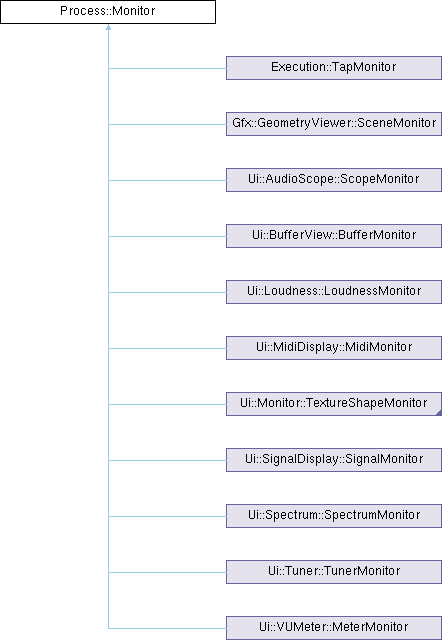
Detailed Description
State shared between a running process and the views that display it.
The process writes it from its execution thread, the views read it on the GUI thread; whatever a subclass adds must be safe for exactly that: no locks, no allocation on the writing side. Both sides hold it through a shared_ptr, so it outlives whichever of the two goes away first.
Several views may show the same process at once (a looping process is drawn once per loop). What a view takes out of the monitor, events or the latest frame, must then reach every one of them: use EventRing and LatestValue, which give all the views refreshed in the same tick of the monitor clock (see monitorFrame()) the same content.
Public Member Functions | |
| Monitor (const Monitor &)=delete | |
| Monitor & | operator= (const Monitor &)=delete |
| bool | watched () const noexcept |
Public Attributes | |
| std::atomic< int > | viewers {0} |
Member Data Documentation
◆ viewers
| std::atomic<int> Process::Monitor::viewers {0} |
How many views are showing the process right now. With none, the process skips what only serves display; measurements that feed its outlets go on.
The documentation for this struct was generated from the following files:
- Monitor.hpp
- MonitorLink.cpp